Here is the full article text for “Classic Greek Salad” (Horiatiki), written in a ready-to-publish website style with no code.
Classic Greek Salad: Authentic, Rustic & Bursting with Summer Flavor
Category: Salads / Mediterranean Classics
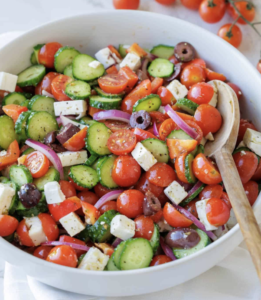
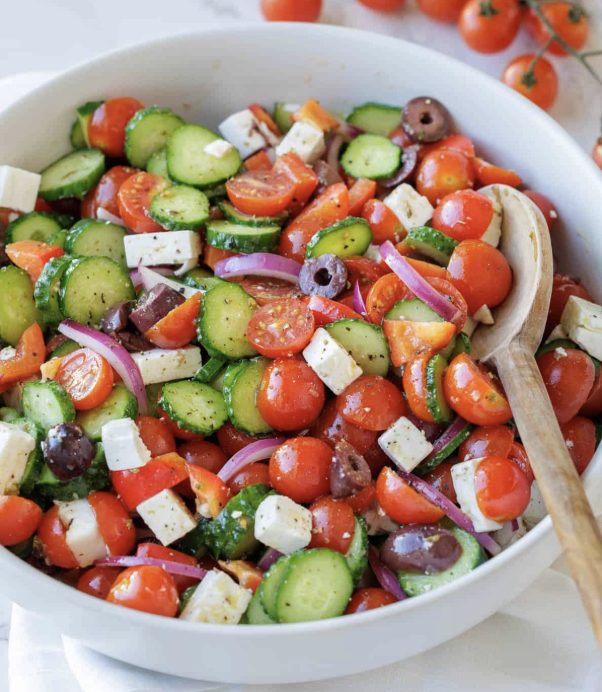
Forget everything you think you know about “Greek salad.” The real thing—Horiatiki, which means “village salad”—has no lettuce, no chopped cucumbers into tiny cubes, and certainly no creamy dressings. Instead, it’s a bold, rustic dish: juicy tomatoes, crisp cucumber, sharp red onion, briny Kalamata olives, and a glorious slab of creamy feta cheese, all dressed simply with good olive oil and dried oregano.
This is the salad you’ll find across Greece from tavernas to family kitchens. It’s fresh, fast, and impossibly flavorful. One bite transports you straight to a sun-drenched terrace overlooking the Aegean.
Prep time: 10 minutes | Serves: 4 as a side, 2 as a light meal
Why This Recipe Is Authentic
- No lettuce. Traditional Greek salad is all about the vegetables that thrive in the Mediterranean sun.
- Feta is served in a block. Never crumbled. You break it with your fork as you eat.
- Simple dressing. Just extra virgin olive oil, red wine vinegar (or lemon), and dried oregano. No whisking, no emulsifying.
- The vegetables matter. Ripe, in-season tomatoes are non-negotiable for the real experience.
Ingredients
For the Salad
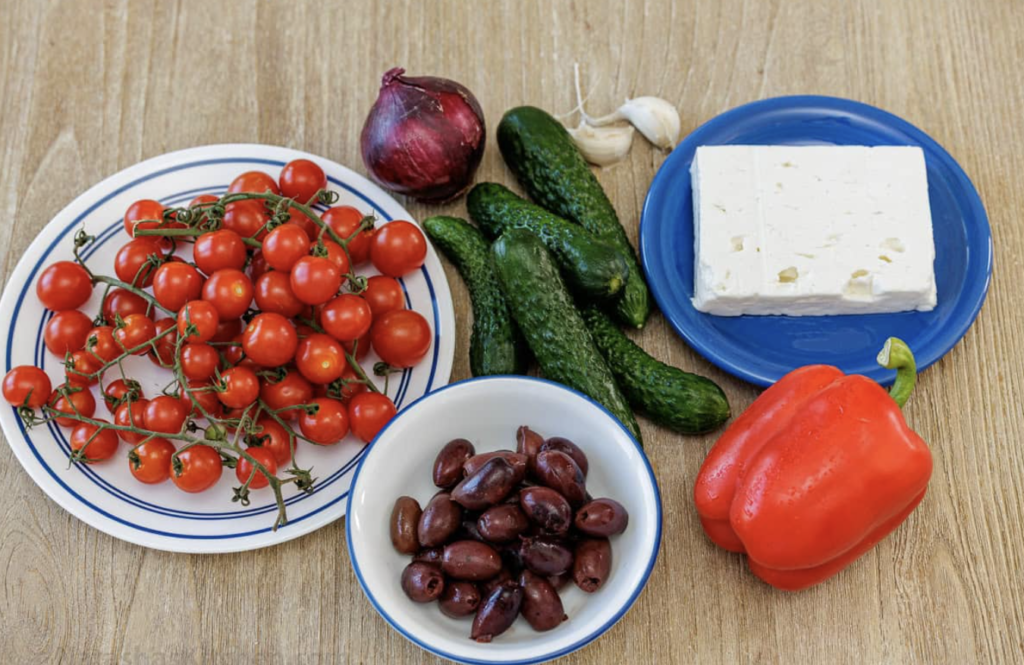
- 4 large ripe tomatoes (or 6 Roma tomatoes), cut into wedges or rough chunks
- 1 English cucumber (or 2 smaller Persian cucumbers), sliced into half-moons about ½-inch thick
- ½ medium red onion, thinly sliced (soak in cold water for 5 minutes if you want milder flavor)
- ½ cup Kalamata olives, pitted or whole
- 1 green bell pepper, seeded and sliced into rings or chunks (optional but traditional)
- 1 block (7–8 oz / 200g) good-quality feta cheese (preferably Greek, made from sheep or goat milk)
For the Dressing
- ¼ cup extra virgin olive oil (the best you have)
- 1½ tablespoons red wine vinegar (or fresh lemon juice)
- 1 teaspoon dried oregano (Greek oregano if possible)
- ½ teaspoon flaky sea salt (or to taste)
- Freshly ground black pepper to taste
For Garnish
- Extra dried oregano
- Crusty bread for serving (essential for sopping up the juices)
Step-by-Step Instructions
1. Prep the vegetables
Wash all vegetables well. Cut tomatoes into large wedges or rustic chunks—about 1½ inches wide. Slice the cucumber into thick half-moons (peel it in alternating strips if you like, but leaving some skin on adds color and crunch). Slice the red onion thinly. If the onion tastes too sharp, soak the slices in ice water for 5–10 minutes, then drain and pat dry. Slice the green pepper into rings or bite-sized strips.
2. Assemble the salad
In a large, shallow bowl or on a platter (a wide bowl is best so the dressing coats everything evenly), arrange the tomatoes, cucumber, onion, bell pepper, and Kalamata olives. Don’t toss yet.
3. Add the feta the right way
Place the entire block of feta cheese right in the center of the vegetables. Do not crumble it. The tradition is to serve it whole, and everyone breaks off pieces as they eat.
4. Dress simply
Drizzle the olive oil evenly over everything. Add the red wine vinegar (or lemon juice). Sprinkle with dried oregano, sea salt, and black pepper.
5. Serve immediately
Do not toss the salad until you’re at the table. The idea is to let the dressing mingle naturally with the vegetables and the feta. Serve with plenty of crusty bread to soak up the tomato-olive oil juices left in the bowl—that liquid is pure gold.
Pro Tips for the Best Greek Salad
Use the best tomatoes you can find. This salad lives or dies on tomato quality. If tomatoes aren’t in season, try grape or cherry tomatoes (halved) as a backup. Never use pale, hard winter tomatoes.
Don’t skimp on olive oil. A good Greek salad glistens. You want enough oil to coat every vegetable and mingle with the tomato juice into a kind of informal dressing.
Feta matters. Look for feta made in Greece with sheep’s milk or a sheep/goat blend. Avoid “salad style” or cow’s milk feta—it lacks that tangy, creamy, salty personality. Block feta packed in brine is best.
Red wine vinegar vs. lemon. Both are authentic. Vinegar gives sharper tang; lemon is brighter. Some Greeks use only olive oil and oregano, letting the tomatoes provide the acid. Try both and see what you love.
Add capers if you’re feeling fancy. A tablespoon of drained capers is a wonderful briny addition, especially on the islands.
What to Serve With Classic Greek Salad
- Grilled meats – Lamb chops, chicken souvlaki, or pork skewers.
- Fresh bread – A crusty boule, pita, or country loaf is mandatory.
- Tzatziki – Cool cucumber-yogurt dip on the side.
- Roasted potatoes – Greek-style with lemon and oregano.
- White wine – A crisp Assyrtiko or Sauvignon Blanc.
As a light meal on its own, serve the salad with warm pita and a dollop of tzatziki. It’s refreshing, satisfying, and takes under 10 minutes.
Variations & Regional Differences
No green pepper: Many traditionalists skip the bell pepper. Feel free to leave it out—the salad is still authentic.
With capers: Popular on the islands, especially Crete.
Add anchovies: Some versions include a few salted anchovies for extra umami.
Cucumber peeled completely: Some Greeks peel every other strip; others peel the whole cucumber. Your choice.
With purslane: Wild purslane (andrakla) is sometimes added for a lemony, juicy crunch.
The “American” Greek salad: If you must have lettuce, add a handful of romaine. But know that you’ve left tradition behind (and that’s okay—just call it a Greek-inspired salad).
Storage & Make-Ahead Tips
This salad does not keep well. Once dressed, the vegetables release juices and become soggy within a few hours. It’s best eaten immediately.
Meal prep option: Chop all vegetables and store separately in the fridge (keep tomatoes, cucumber, onion, pepper, and olives in their own containers). Combine, add feta, and dress right before serving. This works beautifully for packed lunches.
Leftover salvage: If you have leftover dressed salad, drain off the liquid and use it as a briny, delicious topping for grilled fish or chicken the next day.
Nutrition (per serving, without bread)
| Nutrient | Amount |
|---|---|
| Calories | 340 |
| Protein | 9g |
| Fat | 28g |
| Carbohydrates | 14g |
| Fiber | 4g |
| Sugar | 8g |
| Sodium | 890mg |
Nutrition is an estimate using full-fat feta and ¼ cup olive oil for 4 servings.
Frequently Asked Questions
Why is there no lettuce in a real Greek salad?
Traditional village salad (Horiatiki) was made by farmers using what grew in their gardens: tomatoes, cucumbers, peppers, onions, and olives. Lettuce wilts quickly and wasn’t a staple in that rustic context. The salad is meant to be hearty, not leafy.
Can I use crumbled feta?
You can, but you’ll lose some of the experience. Serving the feta as a block allows it to stay creamy and salty until you break it. Crumbled feta dries out and distributes too evenly. For authenticity, keep it whole.
Is Greek salad healthy?
Yes! It’s packed with vegetables, healthy monounsaturated fats from olive oil, and calcium from feta. It’s low in carbs and naturally gluten-free. Just go easy if you’re watching sodium—feta and olives are salty.
What’s the best olive oil for this?
A good quality Greek extra virgin olive oil (like from Kalamata, Crete, or Laconia) is ideal. But any robust, peppery EVOO will work. Avoid “light” or highly processed olive oils.
Can I add chicken or shrimp?
Absolutely, though it’s no longer a classic Greek salad. Grilled chicken or shrimp turns it into a satisfying main course salad. Just keep the dressing and vegetable prep the same.
A Little History
Horiatiki translates directly to “from the village.” It emerged as a simple, affordable meal for Greek farmers who would eat it with bread for lunch during the hot summer months. No fancy ingredients—just what was fresh and available. Over time, it traveled from village kitchens to taverna menus to the rest of the world. Today, it’s Greece’s most famous culinary export after olive oil and feta. And once you make it the real way, you’ll understand why.
Final Note
A perfect Greek salad is a lesson in restraint. You don’t need a complicated dressing, fifteen ingredients, or culinary tricks. You need ripe tomatoes, good feta, excellent olive oil, and a light hand. Let the ingredients speak for themselves.
Make this on a warm evening, pour a glass of crisp white wine, tear off a hunk of bread, and enjoy every last drop of that tomato-olive oil sauce at the bottom of the bowl.